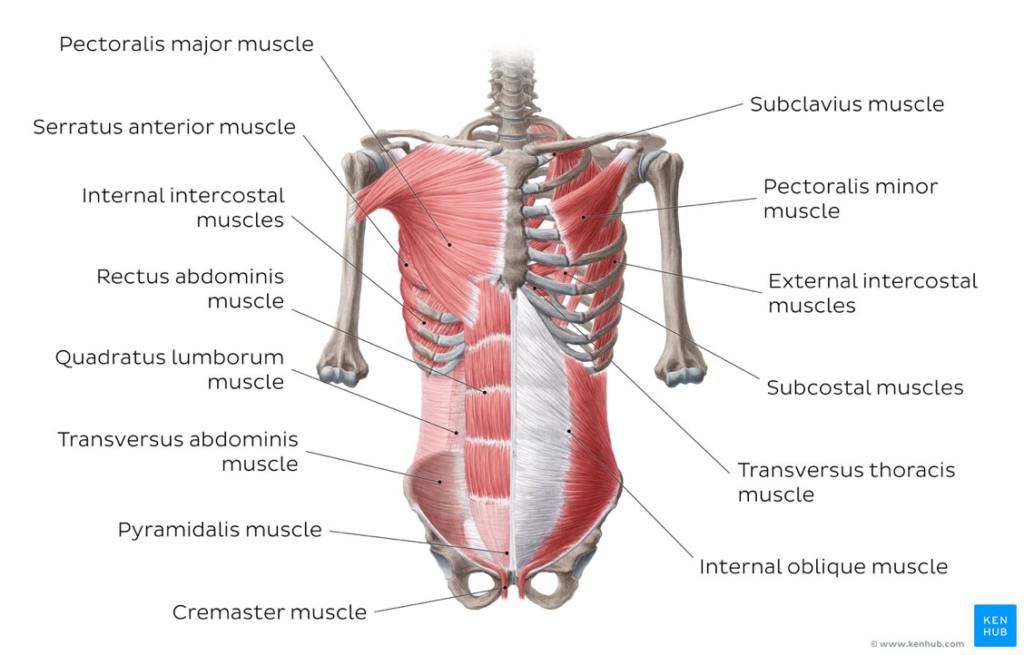
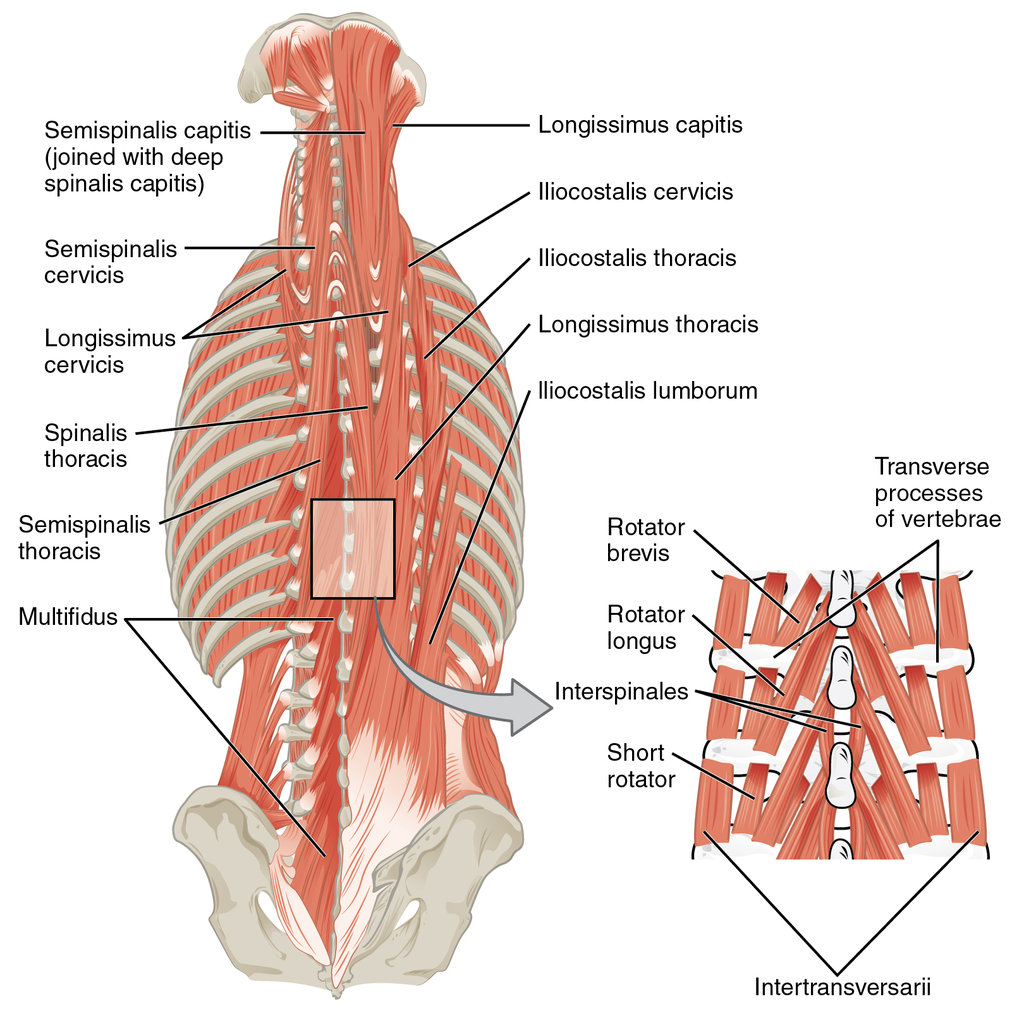
The core is made up of a group of muscles around the trunk that work together to support the spine, pelvis, and body during movement. These muscles are often divided into two groups: deep stabilizing muscles and larger superficial muscles.
The deep core muscles include the transversus abdominis, lumbar multifidus, diaphragm, pelvic floor muscles, internal oblique, and quadratus lumborum. These muscles sit close to the spine and help provide segmental stability, postural control, and support for the lower back.
The superficial core muscles include the rectus abdominis, external oblique, erector spinae, latissimus dorsi, and hip muscles such as the gluteals. The muscles at the back, particularly the multifidus and erector spinae, are important because they help support upright posture, control spinal movement, and resist excessive strain on the lower back.
When all of these muscles work together properly, they help stabilise the spine, improve posture, and reduce unnecessary stress on the joints and discs of the lower back.
This is why the core is often described as the body’s natural support system.
How do Weak Core Muscles Produce Lower Back Pain?
When the core muscles are weak or not working properly, the spine may lose some of the support and stability it needs during everyday activities. As a result, other structures such as the ligaments, joints, and discs in the lower back may be placed under greater stress.
Weak deep stabilising muscles, particularly the transversus abdominis and multifidus, may reduce the body’s ability to control small spinal movements effectively, which can lead to poor movement patterns and increased strain over time. In addition, if the larger outer muscles try to compensate for this lack of stability, they can become overworked and tense, which may also contribute to discomfort or pain.
Over time, reduced core support can affect posture, lifting, bending, and prolonged sitting or standing, all of which may place extra load on the lower back. This is why poor core strength or poor core muscle control is often associated with ongoing or recurrent low back pain which requires lower back pain treatment.
What Exercises Improve Core Muscles to Help Prevent Back Pain?
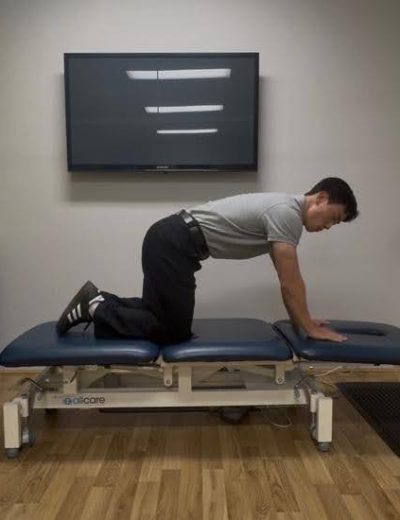
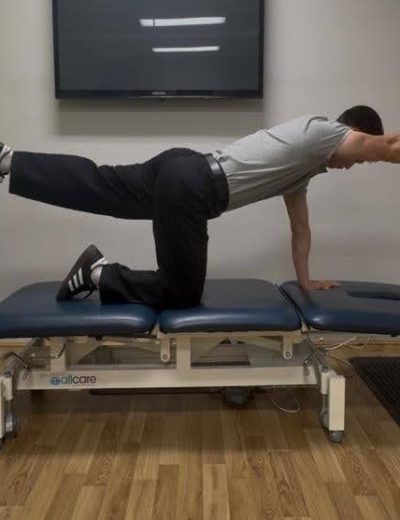
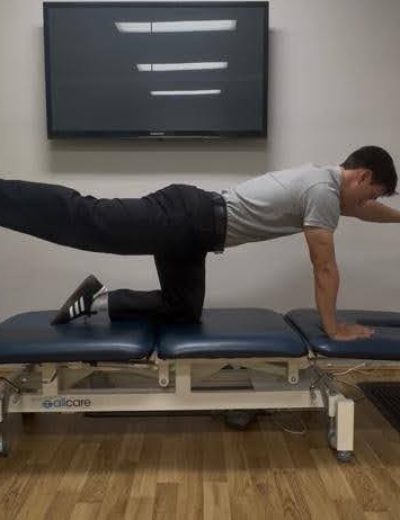
Bird-dog
Instructions: Start on your hands and knees with your spine in a neutral position. Gently tighten your abdominal muscles. Slowly extend one arm forward and the opposite leg backward. Keep your trunk steady and avoid rotating your hips or arching your back. Hold for 3–5 seconds, then return to the starting position and repeat on the other side.
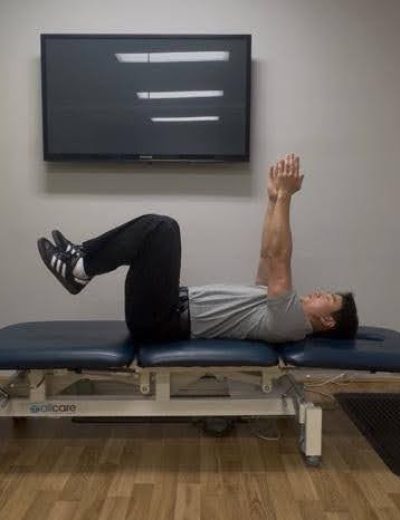
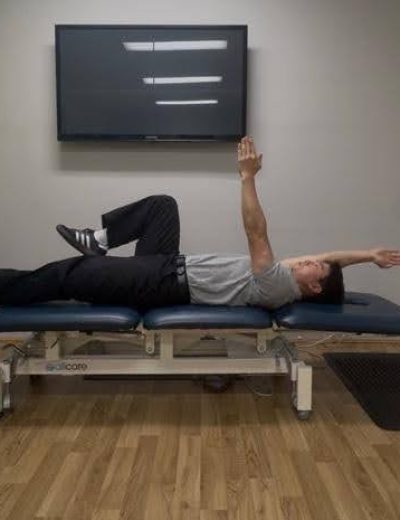
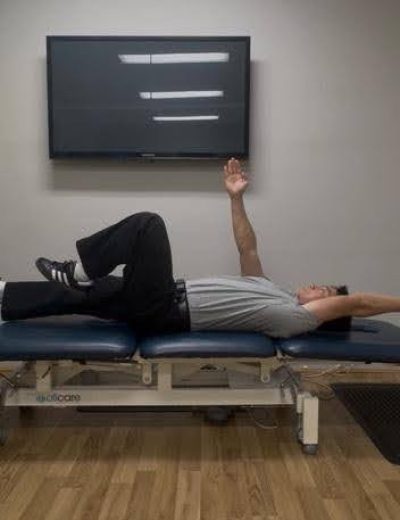
Dead Bug
Instructions: Lie on your back with your knees bent to 90 degrees and arms pointing toward the ceiling. Tighten your core and keep your lower back gently supported against the floor. Slowly lower one arm overhead and the opposite leg toward the floor. Return to the starting position and repeat on the other side. Keep the movement slow and controlled.
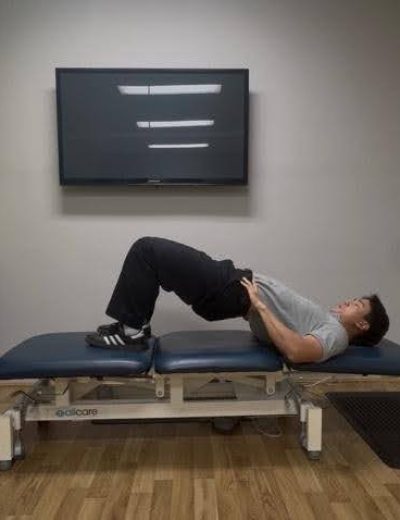
Hip Bridge
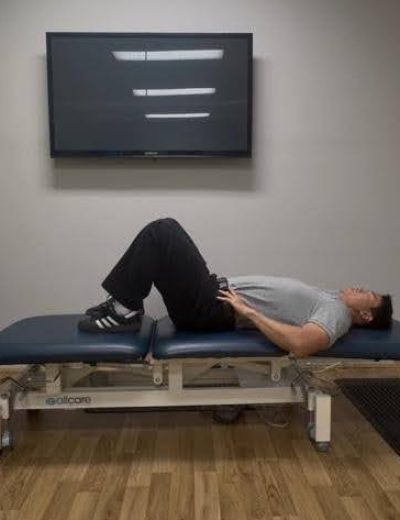
Instructions:
Lie on your back with your knees bent and feet flat on the floor, hip-width apart. Tighten your core and squeeze your glutes. Lift your hips off the floor until your shoulders, hips, and knees form a straight line. Hold briefly, then slowly lower back down. Avoid arching your lower back during the movement.
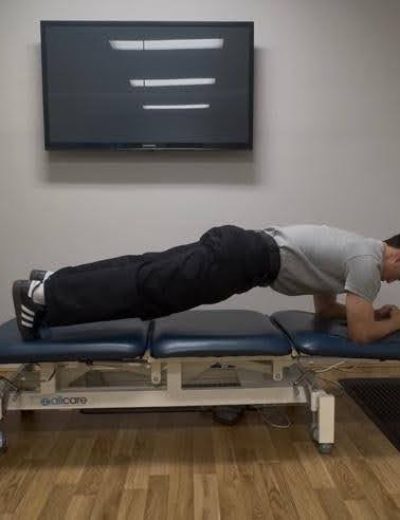
Advanced Core Exercise: Front Plank
Instructions:
Start on your forearms and toes with your elbows directly under your shoulders. Tighten your core and keep your body in a straight line from head to heels. Avoid letting your hips drop or lift too high. Hold the position while breathing steadily, then rest.
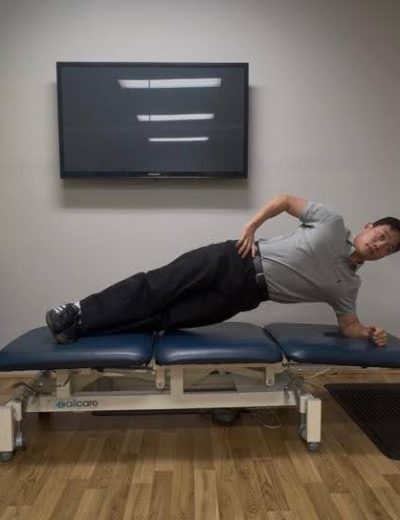
Side Plank
Instructions: Lie on your side with your elbow directly under your shoulder and your legs stacked. Tighten your core and lift your hips off the floor so your body forms a straight line. Keep your neck relaxed and avoid twisting your trunk. Hold the position, then lower slowly and repeat on the other side.
References:
Chang, W.-D., Lin, H.-Y., & Lai, P.-T. (2015). Core strength training for patients with chronic low back pain. Journal of Physical Therapy Science, 27(3), 619–622.