
What is Shoulder Bursitis?
Why is it sometimes called Rotator Cuff Tendinopathy?
Shoulder bursitis refers to irritation of the subacromial bursa, a small fluid-filled structure that helps reduce friction between the rotator cuff tendons and the bone above the shoulder. As you can see the picture below, the bursa sits very close to the rotator cuff tendons, irritation in this area often affects both structures at the same time. As a result, people diagnosed with shoulder bursitis may also be told they have rotator cuff tendinopathy. In many cases, these conditions overlap rather than occur separately, which is why different terms are sometimes used to describe very similar shoulder pain.
For this reason, clinicians often use the umbrella term rotator cuff–related shoulder pain (RCRSP) to describe shoulder pain arising from the rotator cuff tendons and surrounding structures, including the subacromial bursa.
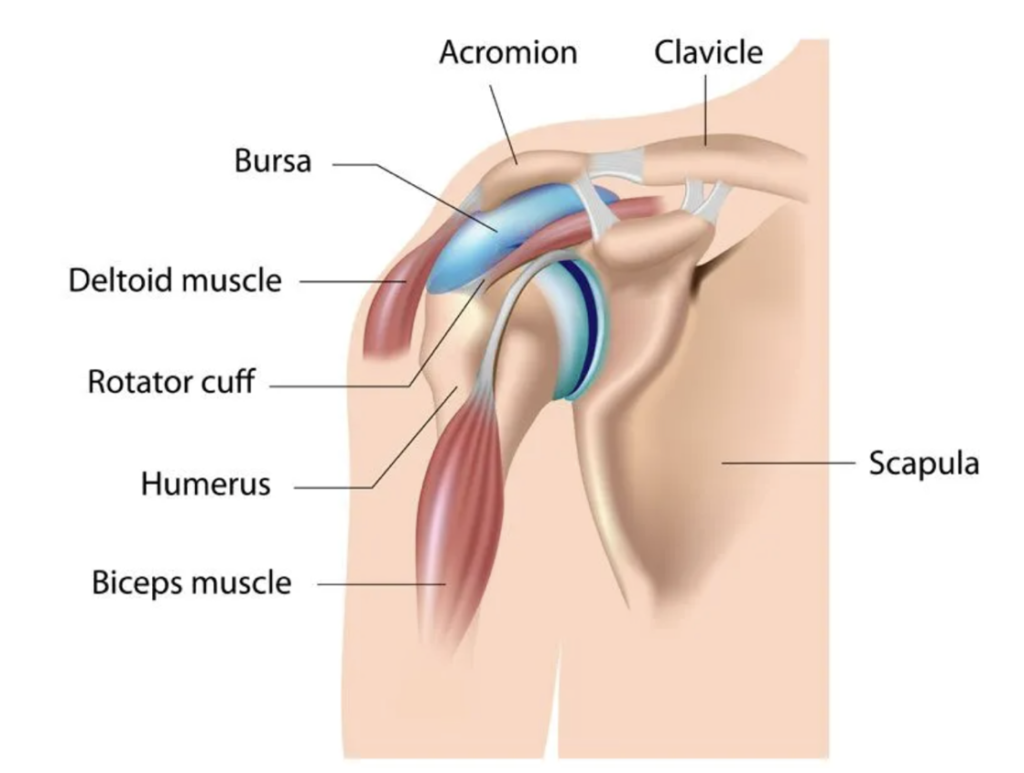
Why does the Bursa on the Shoulder become Irritated?
The subacromial bursa can become irritated when there is repeated friction or increased pressure between the rotator cuff tendons and the bone above the shoulder (the acromion). This commonly happens during activities that involve frequent overhead movement, lifting, or sustained shoulder positions, especially when the shoulder muscles are tired or not working efficiently. Over time, these repeated loads can make the bursa more sensitive and swollen, leading to pain during movements such as reaching overhead, dressing, or lying on the affected shoulder. Factors such as reduced rotator cuff strength, poor shoulder blade control, posture, or a sudden increase in activity levels can all contribute to this irritation.
How do we treat Shoulder Bursitis?
Treatment for shoulder bursitis focuses on reducing irritation of the subacromial bursa and improving how the shoulder moves and tolerates load. In many cases, shoulder bursitis responds very well to physiotherapy, especially when treatment addresses both pain and the underlying contributing factors rather than inflammation alone.
In the early stage, reducing aggravating activities such as repeated overhead movements or heavy lifting can help settle symptoms. Gentle shoulder movements such as foam roller wall slide, are encouraged to maintain mobility and prevent stiffness. As shoulder pain improves, rehabilitation typically progresses to strengthening the rotator cuff muscles and improving shoulder blade control, which helps reduce pressure on the bursa during arm movement. Addressing posture and gradually returning to normal activities are also important parts of recovery.
If symptoms are more severe or persistent, your doctor may recommend additional options such as anti-inflammatory medication or a corticosteroid injection to help reduce irritation. However, these treatments are usually most effective when combined with an exercise-based rehabilitation program to support long-term recovery and prevent symptoms from returning.
Shoulder bursa exercises to treat early to mid-term phase symptoms
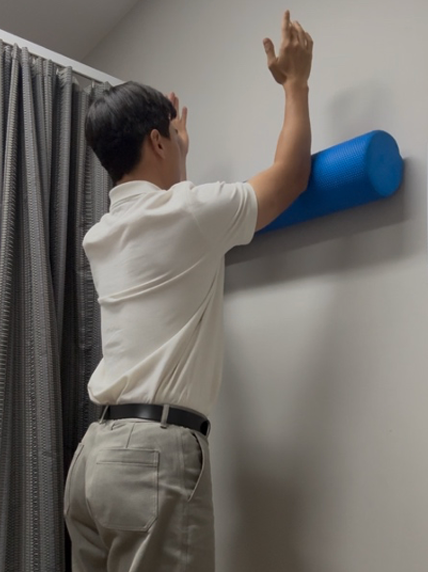
Foam roller wall slide mobility exercise
Instructions:
- Stand facing a wall with a foam roller placed between your forearms and the wall.
- Keep your elbows shoulder-width apart and gently press your forearms into the roller.
- Slowly slide your arms upward along the wall as far as comfortable.
- Keep your shoulders relaxed and avoid arching your lower back.
- Pause briefly at the top, then slowly return to the starting position.
This exercise helps improve shoulder mobility and keeps the shoulder joint moving smoothly. Gentle movement like this reduces stiffness around the joint and surrounding tissues, which can help decrease irritation and improve comfort during daily activities such as reaching overhead or dressing. It also encourages the shoulder blade muscles to work properly, supporting better shoulder movement over time.
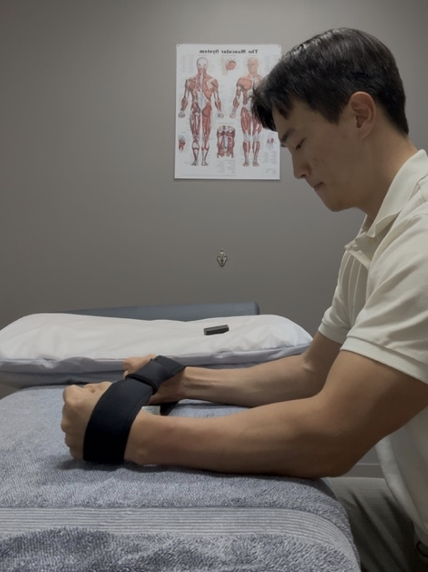
Shoulder Isometric External Rotation Strengthening Exercise
Instructions:
- Sit comfortably with your elbow bent to about 90 degrees and resting by your side.
- Place a resistance band around your hands (as shown) or gently press your hand outward against resistance.
- Keep your elbow tucked close to your body.
- Gently push your hand outward without actually moving your arm.
- Hold the contraction for 5–10 seconds, then relax.
Isometric exercises involve activating the muscle without moving the joint, which makes them especially helpful in the early stages of shoulder pain. They allow the rotator cuff muscles to start working again while placing less stress on sensitive tissues. Isometric contractions can also help reduce pain by improving muscle activation and supporting the shoulder joint without aggravating symptoms. This makes them a safe and effective starting point before progressing to more dynamic strengthening exercises.
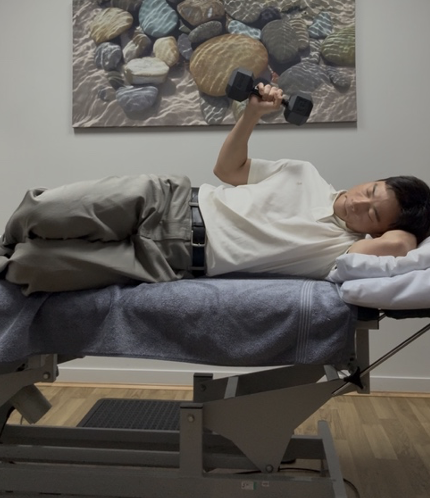
Shoulder Eccentric External Rotation Exercise
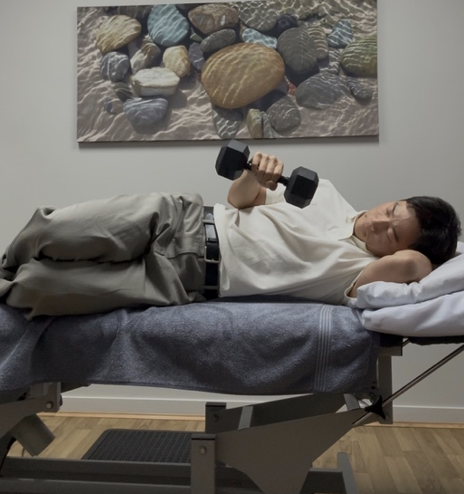
Instructions:
- Lie on your side with the affected shoulder on top.
- Bend your elbow to about 90 degrees and keep it resting comfortably against your body.
- Hold a light weight (such as a small dumbbell) in your hand.
- Use your other hand to help lift the weight upward into the starting position if needed.
- Slowly lower the weight downward in a controlled manner.
- Take about 3–5 seconds to lower the arm.
- Return to the starting position and repeat.
Eccentric strengthening involves activating the muscle while it lengthens, which places a controlled load on the tendon. This type of exercise is especially helpful in the early to mid stages of recovery because it encourages tendon adaptation and improves muscle strength without placing excessive stress on the shoulder joint. Eccentric exercises also help improve the tendon’s ability to tolerate load gradually, which is important for reducing pain and supporting long-term recovery.