More than just “not falling over”
Balance is often misunderstood as simply the ability to stay upright.
In reality, it is a complex and dynamic process that allows the body to maintain stability while both stationary and in motion. In rehabilitation, balance plays a critical role, not just in recovery from injury, but in restoring confidence, movement efficiency, and long-term function.
Balance relies on the integration of three key systems:
Visual system
Provides external feedback about the environment
sswcharity.org.uk/visual-stress-what-is-it
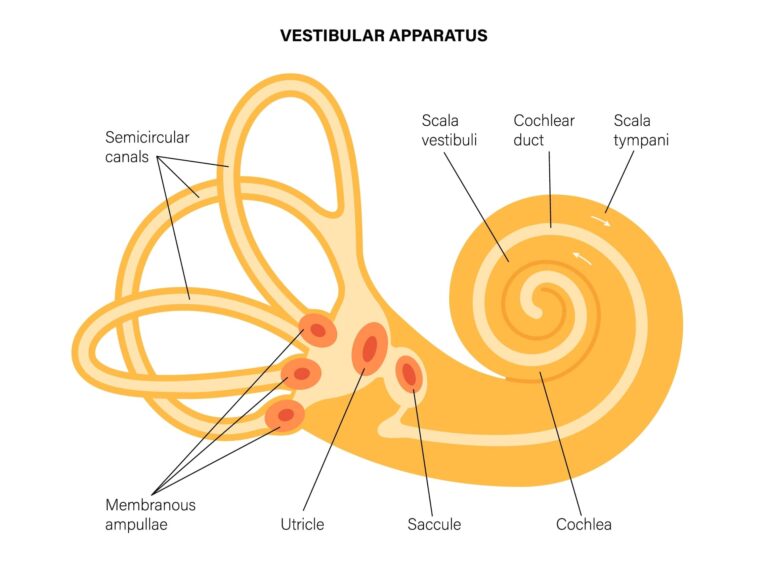
Vestibular system
Detects head movement and spatial orientation
premierneurologycenter.com/blog/the-vestibular-system-what-it-is-and-how-it-affects-balance
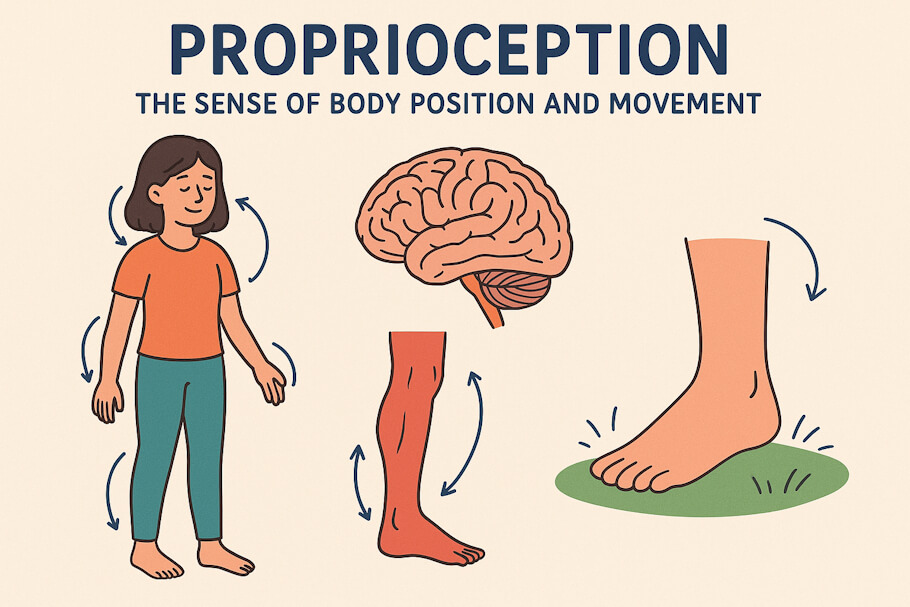
Proprioception
Gives internal feedback about joint position and movement
disabled-world.com/disability/publications/journals/proprioception.php
These systems work together to allow the body to respond and adapt to constantly changing demands.
Following injury, especially musculoskeletal injuries such as ankle sprains, proprioception is often impaired. This deficit can persist even after pain has resolved, increasing the risk of re-injury. This is why rehabilitation should not stop at pain reduction. Instead, it should progress toward restoring neuromuscular control and dynamic stability.
Vestibular physiotherapy aims to reduce dizziness, improve balance, and retrain your brain to compensate for vestibular deficits.
Effective balance training starts with:
Single leg stance
Simple, controlled exercise
hingehealth.com/resources/articles/single-leg-stance
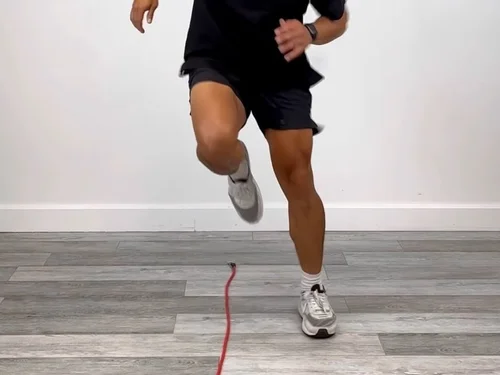
Hopping, direction changes, unstable surface training
Dynamic and functional movements
rehabhero.ca/exercise/single-leg-lateral-hops
The key focus should always be on quality of movement, control, and consistency rather than intensity alone.
Incorporating balance training into rehabilitation not only improves joint stability but also enhances coordination, reaction time, and overall movement confidence. Whether you are recovering from an injury or aiming to optimise performance, balance training is an essential component that should not be overlooked.
While balance training is essential, it’s important not to overlook the role of strength. Balance is not just about staying stable, it’s about having the physical capacity to control your body under different demands. Without sufficient strength, especially in key stabilising muscles, the body lacks the ability to respond effectively to movement and external forces.
Strength provides the foundation for balance. It allows you to absorb force, control joint position, and maintain alignment during dynamic tasks. This becomes even more important in higher-level activities such as running, jumping, and changing direction, where the demands on the body increase significantly.
However, strength alone is not enough again. True functional stability comes from the combination of strength and neuromuscular control. This is why the most effective rehabilitation and performance programs integrate both strength training and balance work.
In the end, it’s not about choosing one over the other.
It’s about building strength to support balance, and training balance to fully utilise that strength.